
Men's Hair Loss Treatment: Causes, Options, and What Helps
Explore men's hair loss treatment options, from causes to a provider evaluation, at Lyva Wellness in Avondale Estates, Georgia.
Alaa Hammond, MSN, APRN, FNP-C, MSN, APRN, FNP-C
September 3, 2026
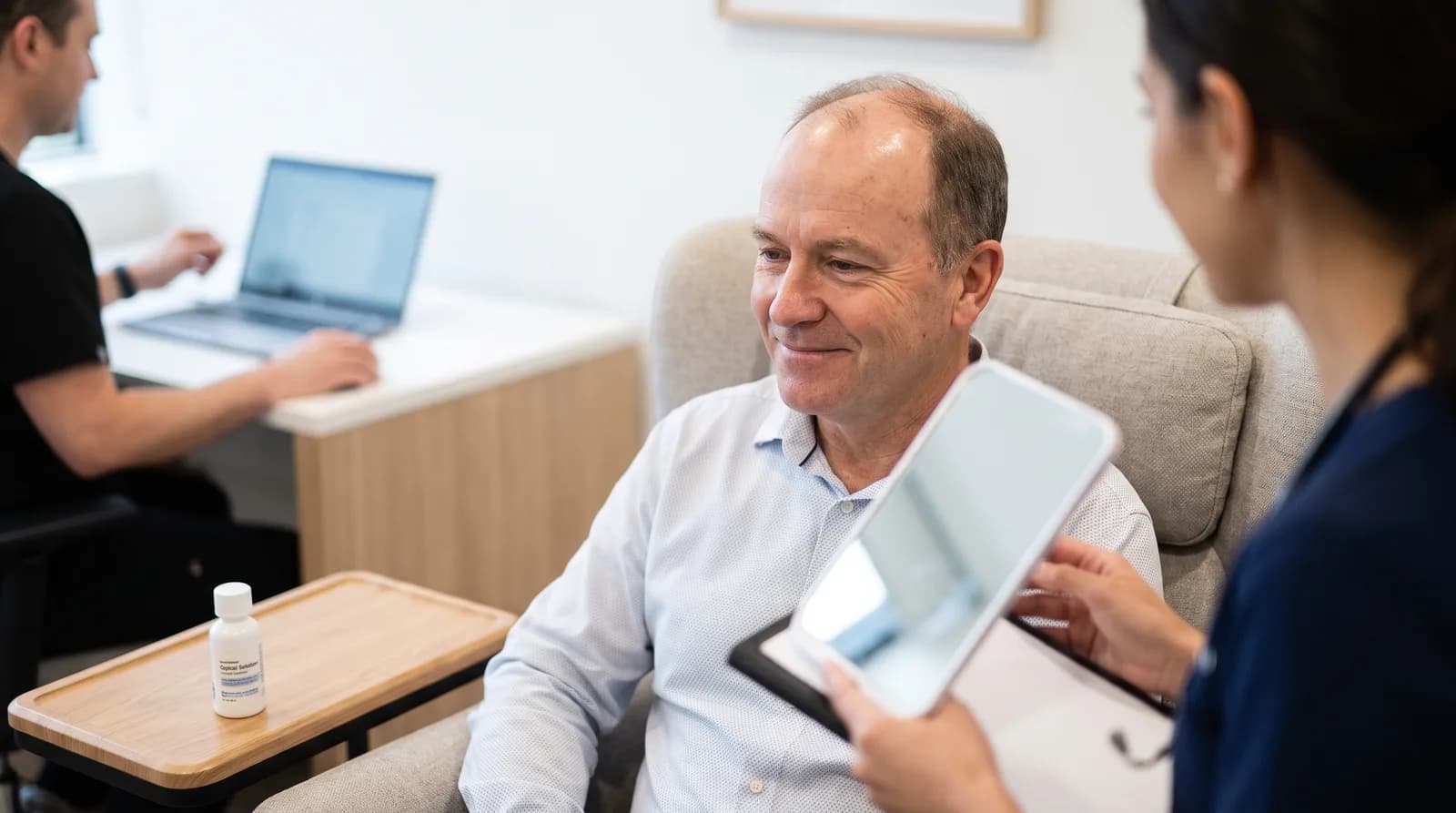
Men's hair loss treatment options have expanded well beyond the products your father might have tried. If you've noticed more hair in the shower drain, you're not alone, and Lyva's wellness services take a hormone-informed approach if thinning shows up alongside other changes. Most men will experience some degree of hair thinning by their fifties, and for many it starts even earlier.
The good news: there are real, evidence-based ways to address it. But the right approach depends on what's actually causing your hair loss. Genetics, hormones, and everyday habits can all play a role. This guide walks through what causes hair loss in men, which treatments have evidence behind them, and how a provider evaluation can help you figure out what's worth trying.
What Causes Hair Loss in Men?
Most men lose hair because of androgenetic alopecia, a genetic condition also called male pattern baldness. Hair follicles become more sensitive to hormones over time. That causes hair to thin and eventually stop growing, usually in a predictable pattern across the scalp.
This pattern shows up as a receding hairline, thinning at the crown, or both, and it tends to run in families. According to MedlinePlus, androgenetic alopecia is the most common cause of hair loss in men, affecting roughly 50% of men by age 50 and climbing to about 80% by age 80. Two men in the same family can still lose hair at very different rates.
Notice thinning that feels different from what's typical in your family? Or happening fast? Mention it to your provider. Sudden or patchy hair loss can sometimes point to something other than genetics, like a thyroid issue or nutrient deficiency, and those are worth ruling out.
What Are the Options for Men's Hair Loss Treatment?
These options fall into four general categories: topical treatment, oral medication, in-office procedures, and lifestyle support. Most men do best combining more than one, under a provider's guidance rather than picking one at random.
Here's a breakdown of what's typically available:
- Topical minoxidil, an over-the-counter treatment applied directly to the scalp to help slow shedding and support regrowth in some men
- Oral finasteride, a prescription medication that works on the hormonal process behind pattern baldness and requires a provider evaluation first
- Low-level laser therapy, delivered through an at-home cap or comb device, used to stimulate follicle activity
- Platelet-rich plasma (PRP) injections, which use a concentrate drawn from your own blood to support the scalp environment around thinning follicles
- Hair transplant surgery, which relocates follicles from denser areas of the scalp and is typically considered when medication alone hasn't been enough
- Oral supplements like biotin or saw palmetto, often taken alongside other treatments
- Lifestyle adjustments like managing stress, eating enough protein, and getting consistent sleep, which support results but rarely reverse loss on their own
Minoxidil and finasteride are the two most studied options and are often used together. Neither works instantly. According to Mayo Clinic, hair grows in cycles that can last 2 to 6 years. That's why noticeable results often take 3 to 6 months of consistent use to appear, and stopping treatment typically allows shedding to resume.
Laser therapy and PRP have a smaller body of evidence behind them and tend to be used alongside, not instead of, the two medication-based options. A transplant addresses existing bald areas but doesn't stop ongoing thinning elsewhere on the scalp, so many men still pair it with an oral or topical treatment. Supplements are the least studied of the group. Biotin mainly helps if you have an actual deficiency, which is uncommon. Evidence for saw palmetto is limited compared with finasteride.
The right combination depends on your specific pattern of loss, your health history, and your goals. A provider can help you weigh these options against each other instead of guessing based on what worked for a friend.
Can Low Testosterone Contribute to Hair Loss?
Yes. Hormone imbalances, including low testosterone, can play a role in hair thinning for some men. Genetics remain the biggest factor overall, and the relationship is complex: it's often a related hormone, not testosterone itself, that drives pattern baldness.
Testosterone converts into a related hormone called DHT. It's DHT that shrinks hair follicles over time in men who are genetically sensitive to it. According to the Urology Care Foundation, low testosterone becomes more common with age and with conditions like obesity and type 2 diabetes, and research summarized by WebMD suggests up to 40% of men older than 45 have low testosterone. It can show up alongside other symptoms too, like low energy or reduced muscle mass. If hair loss and other signs of hormone imbalance are showing up together, it may be worth getting your levels checked through men's health and hormone care instead of treating hair loss on its own.
Bloodwork is the only reliable way to know if hormones are involved. Guessing based on symptoms alone often leads men toward treatments that miss the actual cause.
How Do You Know Which Treatment Might Work for You?
There's no single hair loss treatment that works the same for every man. The honest answer: it depends on your cause, stage, and goals. A scalp and hormone evaluation is the fastest way to narrow down what's likely to help.
A typical evaluation usually involves a few simple steps:
- A conversation about when your hair loss started and how it has progressed
- A look at family history, since genetics play such a large role
- Basic bloodwork if hormone involvement seems possible
- A discussion of realistic timelines and what results to expect
This process takes the guesswork out of choosing a treatment. It also flags anything unusual, like sudden patchy loss, that might need a different kind of attention.
Bring specifics to your appointment. When did you first notice changes? Do relatives have similar patterns? That detail helps your provider build a plan faster.
Does Stress or Lifestyle Affect Hair Loss?
Yes. Significant stress can trigger a temporary condition called telogen effluvium, which causes noticeable shedding a few months after a stressful event or illness. This differs from genetic pattern baldness, and it usually resolves on its own once the trigger passes.
Mayo Clinic notes that people normally shed 50 to 100 hairs a day, and telogen effluvium can push that number noticeably higher for a few months. It helps to tell the two apart, since one needs medical attention and the other often just needs time:
| Factor | Genetic Hair Loss | Stress-Related Shedding |
|---|---|---|
| Onset | Gradual, over years | Sudden, weeks after a trigger |
| Pattern | Receding hairline or crown thinning | Overall thinning, less patterned |
| Typical course | Progressive without treatment | Often resolves within six to twelve months |
Nutrition matters too. Diets low in iron, protein, or certain vitamins can worsen shedding. Correcting a deficiency mainly stops further loss. It rarely regrows what's already gone.
Shedding follows an illness, surgery, or a major life stressor? Give it a few months before assuming the worst. Not improving? That's a good reason to check in with your provider.
When Should You Talk to a Provider About Hair Loss?
Talk to a provider if hair loss is sudden, patchy, or paired with other symptoms like fatigue or weight changes. Early evaluation matters too. Most treatment options work best when started early.
Waiting rarely helps. Hair follicles that have been dormant for years are harder to bring back than ones just starting to thin. That's one reason providers usually recommend early evaluation over a wait-and-see approach. A visit doesn't mean committing to a specific treatment right away, either. It's simply a chance to understand what's happening and what's realistic, whether that's a topical option, a hormone check, or reassurance that what you're seeing is normal aging.
If you're in the Avondale Estates or metro Atlanta area, Lyva offers same-day appointments and telehealth visits across Georgia. Getting answers doesn't have to mean waiting weeks for a slot.
Men's hair loss treatment works best when it starts with understanding the cause, not picking a product off a shelf. Genetics drive most cases. Hormones, stress, and general health can all play a part too, and only an evaluation can tell you which ones apply to you.
This article is for general educational purposes only and is not a substitute for professional medical advice, diagnosis, or treatment. Always consult your provider at Lyva with any questions about a medical condition or treatment.
Ready to get real answers instead of guessing? A visit with our team is the next step.
Get a Personalized Hair Loss Evaluation
Work with our team at Lyva to find out what's really behind your hair loss and which treatment options make sense for you.
Book an Appointment →Alaa Hammond, MSN, APRN, FNP-C
MSN, APRN, FNP-C · Lyva Primary Care & Wellness Center
Avondale Estates, GA family nurse practitioner providing whole-person primary and preventive care — including chronic disease management, men's health, and medical weight loss — in person and via telehealth across Georgia.
Frequently Asked Questions
Was this article helpful?
You may also like

GLP-1 Medications for Type 2 Diabetes: What to Know
GLP-1 medications for type 2 diabetes lower blood sugar and A1C, and often support weight loss too. Learn how they work and who qualifies at Lyva.

High Cholesterol Explained: When Lifestyle Isn't Enough
High cholesterol often causes no symptoms. Learn what your numbers mean, how long to try lifestyle changes, and when medication may help.

Medical Weight Loss Cost in Georgia: Insurance Guide
See what drives medical weight loss cost Georgia patients pay, from GLP-1 pricing to insurance coverage and Lyva's self-pay options.
Ready to Start Your Health Journey?
Schedule your appointment today and take the first step toward better health. New patients welcome. Most insurance accepted.

Primary Care • Men's Health • Weight Loss Clinic
Phone
+1 (404) 905-6666
Location
Avondale Estates, GA
Hours
Mon-Fri: 8AM - 6PM